

Inflammation and Male Performance:
The Invisible Enemy Slowing You Down
Chronic systemic inflammation suppresses testosterone, clouds cognition, and accelerates physical decline and most men have no idea it's happening. Here's the science, and what to do about it.
There is an enemy operating inside most men's bodies right now. It has no obvious symptoms. It does not announce itself. It does not produce pain in a specific location or a fever or a rash. Instead, it works slowly and systemically, suppressing hormones, clouding cognition, degrading physical performance, and accelerating the biological decline that most men attribute to "getting older" or "stress."
It is chronic systemic inflammation. And in the context of modern British male health, testosterone levels declining, energy falling, brain fog increasingly common, it is arguably the most under acknowledged factor in male physical and cognitive decline.
This guide explains what systemic inflammation actually is, exactly how it suppresses testosterone and cognitive function, which lifestyle factors are driving it, and critically, what the clinical evidence supports in terms of addressing it.
40% of UK adults have elevated CRP
C-reactive protein — a primary marker of systemic inflammation — is elevated in an estimated 40% of adults. Most have no idea
2× Higher inflammation in men with low T
Men with low testosterone consistently show significantly higher inflammatory markers than age-matched men with normal testosterone. The relationship runs in both directions.
72% CRP reduction from curcumin in RCT
A meta-analysis of curcumin supplementation trials found reductions in CRP of up to 72% versus placebo. Curcumin is the active compound in Turmeric.
Disclaimer: This article is for informational purposes and does not constitute medical advice. If you are concerned about your health, speak to your GP. This content discusses food supplements, which are not intended to diagnose, treat, cure, or prevent any disease.
What Is Systemic Inflammation and Why Is It Different From Normal Inflammation?
Most people understand inflammation in the acute sense the redness, heat, and swelling around a cut or a sprained ankle. This is acute localised inflammation, and it is essential. It is the immune system deploying to the site of injury or infection, triggering a cascade of healing responses that clear damaged tissue, fight pathogens, and begin repair. Without it, minor injuries would become life-threatening.
The problem is a different kind of inflammation entirely: chronic systemic inflammation. This is not localised to an injury site. It is not triggered by a pathogen. It is a persistent, low-grade state of immune activation distributed throughout the body present in the blood, the organs, the brain, and the endocrine system simultaneously.
Where acute inflammation is brief, purposeful, and resolves completely, systemic inflammation is ongoing, directionless, and does not resolve without deliberate intervention. It is detectable through blood markers — principally C-reactive protein (CRP), interleukin-6 (IL-6), and tumour necrosis factor-alpha (TNF-α) but produces no specific symptoms that most men would recognise as "inflammation."

What does it feel like?
That is precisely the problem. The subjective experience of chronic systemic inflammation overlaps almost completely with the experience of "not quite performing at your best." Fatigue that sleep does not fully resolve. A mental sluggishness that is not quite brain fog but is not quite sharpness either. Physical recovery that takes longer than it should. A drive and motivation that has quietly dimmed. Most men attribute this to age, stress, or overwork. Much of it is inflammation.
The Hidden Driver
Chronic systemic inflammation has been identified as an underlying contributor to cardiovascular disease, type 2 diabetes, neurodegenerative conditions, and depression — and it directly suppresses both testosterone production and cognitive performance in ways that compound each other. Addressing it is not a marginal health optimisation. It is foundational.
How Inflammation Suppresses Testosterone: The Exact Mechanism
The relationship between inflammation and testosterone is direct, well-documented, and bidirectional — meaning chronic inflammation suppresses testosterone, and low testosterone increases susceptibility to inflammation. Understanding the mechanism clarifies why addressing inflammation is one of the most important steps a man can take for hormonal health.
The Inflammatory Testosterone Suppression Cascade
Step 1 — Trigger: Chronic Inflammatory State
Poor diet, chronic stress, sleep deprivation, sedentary behaviour, and environmental toxins elevate pro-inflammatory cytokines (IL-1β, IL-6, TNF-α) in circulation. The immune system enters a persistent state of low-grade activation.
Step 2 — HPG Axis Suppression
Pro-inflammatory cytokines inhibit the hypothalamic-pituitary-gonadal axis — the hormonal signalling chain that begins in the brain and tells the testes to produce testosterone. Specifically, IL-1β and TNF-α suppress GnRH release from the hypothalamus, reducing LH signalling to the testes.
Step 3 — Leydig Cell Impairment
Independently of the HPG axis, pro-inflammatory cytokines directly impair the function of Leydig cells — the cells in the testes responsible for synthesising testosterone from cholesterol. TNF-α has been shown to reduce StAR protein expression, directly suppressing testosterone biosynthesis at the cellular level.
Step 4 — Increased Aromatisation
Systemic inflammation promotes aromatase enzyme activity — the enzyme that converts testosterone to oestrogen. Adipose tissue (body fat) is a major site of aromatase activity, and inflammation both drives fat accumulation and activates aromatase within existing fat tissue, accelerating the testosterone-to-oestrogen conversion.
Step 5 — The Compounding Cycle
Lower testosterone reduces the body's natural anti-inflammatory capacity — testosterone has documented anti-inflammatory properties. The result is a self-reinforcing cycle: inflammation suppresses testosterone, and lower testosterone increases inflammation, which further suppresses testosterone.

The Research
A study in the Journal of Clinical Endocrinology & Metabolism found significant inverse correlations between serum testosterone and inflammatory markers including IL-6 and CRP in men across multiple age groups. The relationship held after controlling for age, BMI, and other confounders, confirming inflammation as an independent predictor of low testosterone.
How Inflammation Impairs Cognitive Function
The brain is not insulated from systemic inflammation, it has its own immune cells and its own inflammatory response. Understanding neuroinflammation explains why chronic systemic inflammation produces the cognitive symptoms so many men experience but struggle to attribute to a specific cause.
The neuroinflammation mechanism
The brain contains specialised immune cells called microglia. In a healthy brain, microglia are surveillance cells, monitoring for pathogens, clearing cellular debris, and maintaining neural health. When systemic inflammatory signals (including pro-inflammatory cytokines) cross or signal across the blood-brain barrier, microglia become activated.
Activated microglia begin producing their own pro-inflammatory compounds, contributing to what researchers call the sickness behaviour response: fatigue, social withdrawal, reduced motivation, slowed cognitive processing, and impaired memory consolidation. This response evolved as an adaptive mechanism during acute infection, encouraging rest and recovery. In the context of chronic systemic inflammation, it becomes a persistent cognitive impairment.
The BDNF connection
Neuroinflammation also reduces the production of Brain-Derived Neurotrophic Factor (BDNF) a protein essential for the growth, maintenance, and survival of neurons, and for the synaptic plasticity that underlies memory formation and cognitive flexibility. Reduced BDNF is associated with impaired learning, reduced resilience to cognitive stress, and increased risk of depression.
Research published in Neuropsychopharmacology has found that elevated IL-6 is a significant predictor of reduced BDNF, and that reducing inflammatory burden through dietary and lifestyle intervention can restore BDNF to healthy levels.
"Brain fog is not a personality trait. In the majority of cases, it is an inflammatory event with addressable causes."
What this looks like in practice
The cognitive symptoms of neuroinflammation are not dramatic. They are subtle, persistent, and easily normalised, because every other man in the same environment is experiencing the same thing. They include:
Difficulty sustaining concentration on demanding cognitive tasks for extended periods
Slower processing speed — thoughts that feel slightly delayed or effortful
Reduced working memory — holding multiple pieces of information simultaneously feels harder than it should
Word retrieval difficulties — reaching for a word or name and experiencing a brief delay
Reduced motivation and drive — the low-grade anhedonia that is often misattributed to burnout
Emotional reactivity — an irritability or reduced stress tolerance disproportionate to circumstances

What Is Causing Your Inflammation: The Modern Life Problem
Chronic systemic inflammation is not inevitable. It is a consequence of specific, identifiable inputs and understanding what they are is the first step toward addressing them.
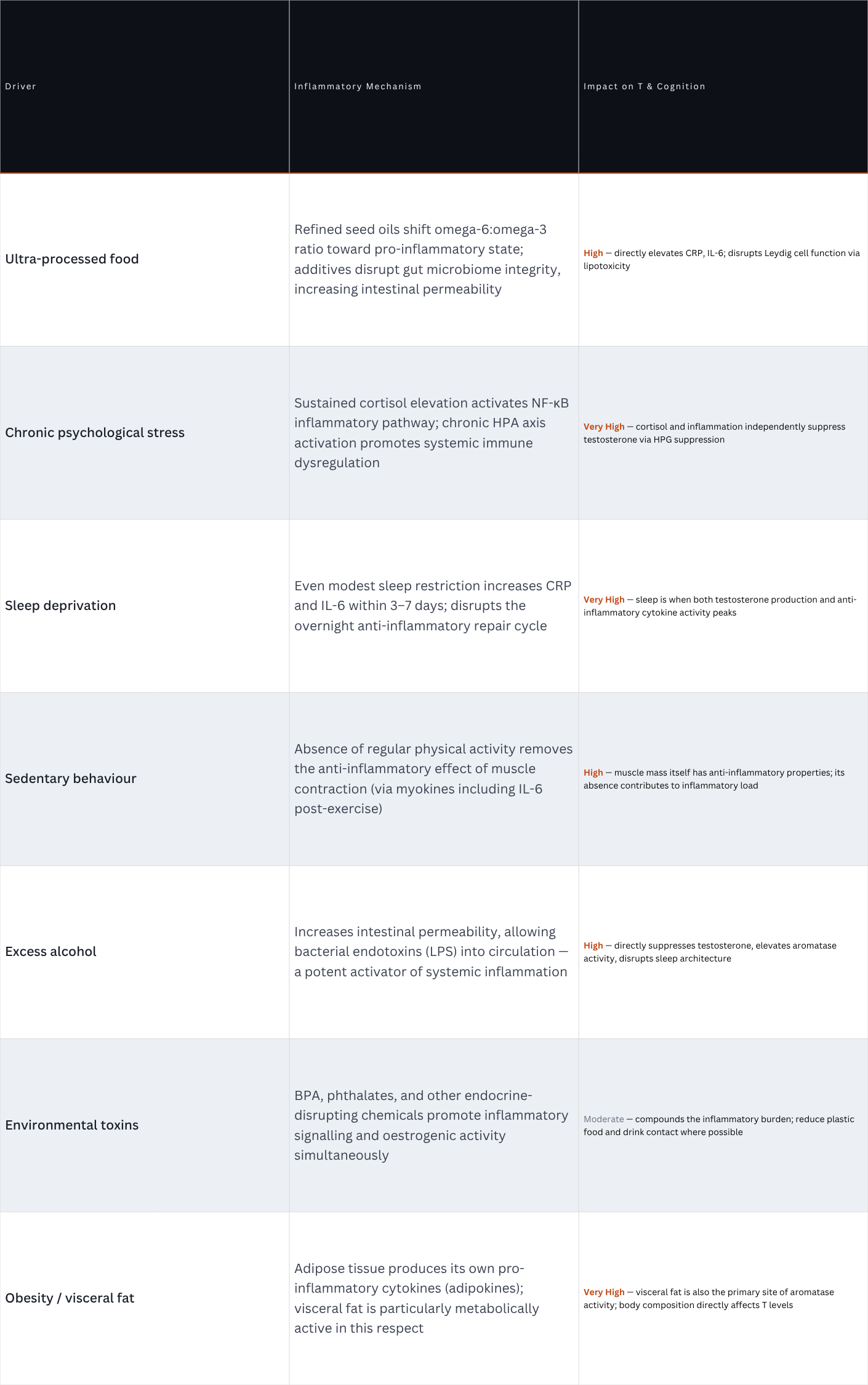
The Compound Effect
Most men are not dealing with one inflammatory driver — they are dealing with several simultaneously. A man who sleeps six hours, eats processed food regularly, has a high-stress job, and does not exercise consistently is stacking inflammatory inputs that compound each other. Addressing the whole picture matters more than optimising any single variable.
The Lifestyle Interventions With the Strongest Anti-Inflammatory Evidence
Before supplementation comes lifestyle. The anti-inflammatory lifestyle interventions below have the strongest evidence base and should form the foundation of any inflammation management strategy.
Sleep — 7–9 hours, consistent schedule. The single most impactful anti-inflammatory intervention available. Deep sleep is when the glymphatic system clears inflammatory waste from the brain. Consistent, quality sleep reduces CRP and IL-6 within days. Everything else in this list builds on this foundation.
Resistance training — 3–4 sessions per week. Muscle contractions during exercise release anti-inflammatory myokines, particularly IL-6 (which paradoxically acts as an anti-inflammatory in the post-exercise context) and IL-10. Regular resistance training is consistently associated with reduced systemic inflammatory markers independent of body composition changes.
Dietary omega-3 to omega-6 ratio. The ideal omega-6:omega-3 ratio is approximately 4:1. The modern British diet typically achieves 15:1 to 20:1 a massively pro-inflammatory imbalance. Increasing oily fish consumption (salmon, mackerel, sardines) or supplementing omega-3 directly addresses this imbalance at the cellular level.
Reduce ultra-processed food. The evidence for ultra-processed food as a driver of systemic inflammation is consistent across multiple population studies. Each ultra-processed meal is not a crisis, but a diet dominated by them is a chronic inflammatory input that no supplement can fully compensate for.
Stress management — cortisol control. Chronic cortisol activation and systemic inflammation share the same downstream pathways. Breath work, deliberate down regulation practices, cold exposure, and social connection all reduce the HPA axis activation that drives the cortisol-inflammation relationship.
Foundation First
Anti-inflammatory supplementation produces its best results on the foundation of these lifestyle inputs, not as a substitute for them. The compounds below are powerful additions to a lifestyle that is already oriented toward reducing inflammatory load. They are not effective substitutes for processed food, chronic stress, and poor sleep.

Anti-Inflammatory Superfoods: What the Evidence Actually Shows
The following compounds have the most robust clinical evidence for reducing systemic inflammatory markers in human subjects. Each one addresses inflammation through a specific, identifiable mechanism — not through vague "antioxidant" claims.
Turmeric (Curcumin)
Primary Anti-Inflammatory · NF-κB Inhibitor
Curcumin — the active polyphenol in Turmeric — is the most extensively studied natural anti-inflammatory compound. Its primary mechanism is inhibition of NF-κB, a transcription factor that regulates the expression of over 200 genes involved in inflammation. It also directly reduces TNF-α, IL-1β, and IL-6 production. Critical caveat: curcumin has poor bioavailability in isolation. Piperine from black pepper increases curcumin bioavailability by up to 2,000%.
Meta-analysis (Sahebkar et al., 2015): curcumin supplementation significantly reduced CRP, IL-6, and TNF-α vs placebo across multiple RCTs. Journal of Nutritional Biochemistry.
Ginger
COX-2 Inhibitor · Prostaglandin Reduction
Ginger's active compounds — gingerols and shogaols — inhibit cyclooxygenase (COX) enzymes and prostaglandin synthesis, reducing the production of pro-inflammatory eicosanoids. This is the same pathway targeted by anti-inflammatory medications, but through a gentler, food-based mechanism. Ginger also reduces oxidative stress by scavenging reactive oxygen species and supporting endogenous antioxidant enzyme activity.
RCT: ginger supplementation over 12 weeks significantly reduced CRP and TNF-α in adults with elevated inflammatory markers. Phytotherapy Research, 2015.
Spirulina
Phycocyanin · Antioxidant Protection
Spirulina is a blue-green microalgae whose primary active compound, phycocyanin, has demonstrated anti-inflammatory and antioxidant properties in clinical research. It inhibits the production of pro-inflammatory cytokines and reduces lipid peroxidation — the oxidative process that damages cell membranes and contributes to chronic inflammation. Spirulina also provides a concentrated source of gamma-linolenic acid (GLA), an omega-6 fatty acid with documented anti-inflammatory effects distinct from the standard omega-6 profile.
Multiple clinical trials demonstrate reductions in inflammatory markers and oxidative stress markers following Spirulina supplementation. Park et al., European Journal of Nutrition, 2008.
Chlorella (Cracked Cell Wall)
Heavy Metal Chelation · Oxidative Burden Reduction
Chlorella's anti-inflammatory contribution is partly indirect — it supports the chelation and elimination of heavy metals and environmental toxins that contribute to inflammatory burden. As the body's detoxification load decreases, systemic inflammatory activity decreases alongside it. The cracked cell wall form is essential for bioavailability — standard Chlorella does not release its active compounds through the intact wall effectively.
Studies show Chlorella supplementation reduces heavy metal biomarkers and associated oxidative stress markers. Nakano et al., Journal of Medicinal Food, 2010.
Beetroot
Nitric Oxide · Endothelial Anti-Inflammation
Beetroot's high dietary nitrate content converts to nitric oxide in the body, which has documented anti-inflammatory effects at the endothelial level — reducing vascular inflammation and improving blood vessel health. Nitric oxide also acts as a signalling molecule that suppresses NF-κB activation and reduces adhesion molecule expression on endothelial cells — a key step in the inflammatory cascade that leads to vascular disease.
Kapil et al.: dietary nitrate supplementation via beetroot juice significantly reduced vascular inflammatory markers and improved endothelial function. Hypertension, 2015.
Acai Berry
Anthocyanins · Reactive Oxygen Species Neutralisation
Acai berries have one of the highest measured ORAC (Oxygen Radical Absorbance Capacity) scores of any food studied. Their high anthocyanin content — the same family of compounds responsible for the anti-inflammatory properties of blueberries and dark cherries — neutralises reactive oxygen species before they can trigger inflammatory cascades. Chronic oxidative stress and chronic inflammation are deeply intertwined; reducing oxidative burden is a direct anti-inflammatory intervention.
Schauss et al.: Acai berry extract showed significant antioxidant capacity and reduced inflammatory marker activity in vitro and in preliminary human studies. Journal of Agricultural and Food Chemistry, 2006.

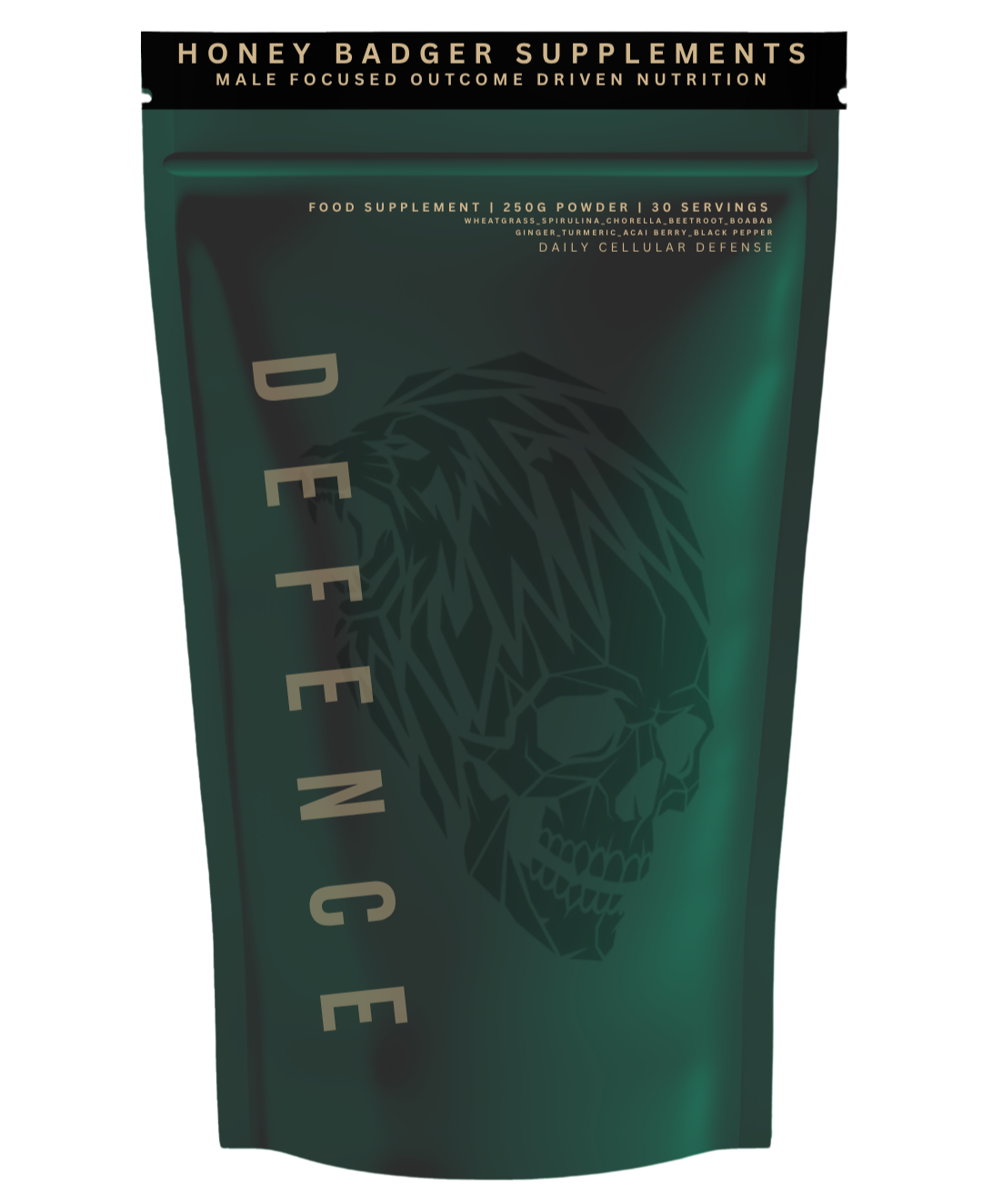
Honey Badger Supplements · Defence Formula
DEFENCE — Pro-Active Superfood Formula
Contains Turmeric, Ginger, Spirulina, Chlorella (cracked cell wall), Beetroot, Acai Berry, Wheatgrass, and Black Pepper — all in a whole-food powder format. UK-made. No fillers.
Why Black Pepper Is Not Optional
One compound deserves special mention: black pepper (piperine). Piperine does not have significant anti-inflammatory effects of its own, but it is the most potent bioavailability enhancer for curcumin known to science. A famous 1998 study published in Planta Medica found that just 20mg of piperine co-administered with curcumin increased curcumin bioavailability by 2,000% in human subjects. Without piperine, the vast majority of curcumin passes through the digestive system without being absorbed. Defence contains black pepper as a deliberate formulation choice, not a flavouring.
The Anti-Inflammatory Protocol: Putting It Together
Addressing chronic systemic inflammation is not a single intervention, it is a protocol across multiple inputs applied consistently over time. Here is the evidence-based daily framework:
Morning — Foundation
Sleep quality audit first. If you are not sleeping 7–9 hours consistently, no anti-inflammatory supplement will compensate for the inflammatory load that sleep deprivation produces daily
Movement within 60 minutes of waking. Even a 20-minute walk activates anti-inflammatory myokine production and reduces morning cortisol elevation
Breakfast rich in omega-3 and antioxidants. Salmon, eggs, nuts, berries. The morning meal sets the inflammatory tone for the afternoon
Daily — Supplementation
Defence taken with dinner. The fat-soluble compounds in Turmeric and Acai absorb best in the presence of dietary fat, evening with a meal is the optimal window
Black pepper always present. If taking curcumin in any form, black pepper must be co-administered for meaningful absorption
Omega-3 supplementation. If oily fish is not a regular feature of your diet, supplementing 2–3g of EPA+DHA daily directly addresses the omega-6:omega-3 imbalance
Ongoing — Lifestyle
Resistance training 3–4 times per week. The anti-inflammatory myokine release from exercise is a powerful systemic intervention
Eliminate or minimise ultra-processed food. The single dietary change with the most consistent evidence for reducing systemic inflammation
Alcohol below 14 units per week. The UK recommended limit is set partly around the threshold above which alcohol begins to significantly increase intestinal permeability and systemic endotoxin load
Assess at 8 weeks. Inflammatory markers, including energy, cognitive clarity, and recovery, show meaningful change at 4–8 weeks of consistent protocol adherence
Not sure where to start?
TAKE the Performance Assessment.
CHANCE TO WIN 3 MONTHS SUPPLY OF LIFE OR DEATH
Frequently Asked Questions
Does inflammation affect testosterone levels?
Yes — directly and significantly through two pathways. First, pro-inflammatory cytokines (IL-1β, IL-6, TNF-α) suppress the HPG axis the hormonal signalling chain that triggers testosterone production. Second, they directly impair Leydig cell function the cells that synthesise testosterone in the testes. Research consistently shows significant inverse relationships between inflammatory markers and serum testosterone in men. Reducing chronic inflammation is a direct and evidence-supported method of supporting healthy testosterone levels.
What is systemic inflammation?
Systemic inflammation is a state of chronic, low-grade immune activation distributed throughout the body distinct from the acute, localised inflammation following injury. It is characterised by elevated blood levels of CRP, IL-6, and TNF-α, and produces no specific localised symptoms. Modern lifestyle factors, poor diet, chronic stress, sleep deprivation, sedentary behaviour, and environmental toxin exposure are its primary drivers in otherwise healthy men.
Can inflammation cause brain fog?
Yes — through a process called neuroinflammation. Pro-inflammatory cytokines activate the brain's own immune cells (microglia), impairing synaptic function, disrupting neurotransmitter signalling, and reducing BDNF production a protein essential for memory formation and cognitive flexibility. The subjective result is the constellation of symptoms most men call brain fog: difficulty concentrating, slow processing, poor recall, and reduced motivation. Reducing systemic inflammation through diet, sleep, and targeted supplementation has been shown to improve these symptoms.
What foods cause inflammation in men?
The most consistent evidence points to ultra-processed foods (refined seed oils, trans fats, additives that disrupt gut microbiome integrity), refined sugar and high-fructose corn syrup, refined carbohydrates with a high glycaemic index, excess alcohol, and industrial seed oils high in omega-6 fatty acids that shift the omega-6:omega-3 ratio toward a pro-inflammatory state. The modern British diet is heavily weighted toward all of these.
What are the best anti-inflammatory superfoods for men?
The compounds with the strongest clinical evidence include Turmeric (curcumin with piperine for bioavailability), Ginger (COX-2 inhibition), Spirulina (phycocyanin, cytokine reduction), Chlorella cracked cell wall (oxidative burden reduction), Beetroot (nitric oxide, endothelial anti-inflammation), and Acai Berry (anthocyanins, reactive oxygen species neutralisation). Together they address inflammation through multiple pathways consistent with the multi-mechanism approach the evidence supports.
How long does it take for anti-inflammatory supplements to work?
Acute effects from curcumin and ginger can be measured within hours in some studies. Sustained reduction in inflammatory biomarkers (CRP, IL-6) becomes statistically significant at 4–8 weeks of consistent daily supplementation in clinical trials. Full benefit from a comprehensive protocol, combining dietary changes, improved sleep, exercise, and supplementation — is typically seen at 8–12 weeks. Consistency is more important than dose for natural anti-inflammatory compounds.
The Honest Summary
Chronic systemic inflammation is not a fringe health concern or a medical diagnosis reserved for the unwell. It is a measurable, addressable physiological state that is present in a significant proportion of otherwise healthy British men, driven by diet, stress, sleep, and environmental inputs that define modern life.
Its impact on testosterone is direct and mechanistically clear. Its impact on cognitive function is equally well-documented. And its contribution to the general sense of "not quite at my best" that many driven men experience, but struggle to name or address is more significant than most people appreciate.
The protocol for addressing it is not complicated. Sleep must come first, no supplement compensates for the inflammatory load of chronic sleep deprivation. Resistance training, dietary omega-3, and reduction in ultra-processed food follow. On that foundation, the anti-inflammatory superfoods with the strongest clinical evidence, Turmeric with piperine, Ginger, Spirulina, Chlorella, Beetroot, Acai Berry provide a meaningful and cumulative additional lever.
Inflammation is the invisible enemy. Making it visible and taking deliberate action against it, is one of the highest-leverage interventions available to a man who takes his performance seriously.
Clinical References
Kupelian V et al. (2006). Low sex hormone-binding globulin, total testosterone, and symptomatic androgen deficiency are associated with development of the metabolic syndrome in nonobese men. Journal of Clinical Endocrinology & Metabolism, 91(3), 843–850. PubMed
Sahebkar A et al. (2016). Effect of curcuminoids on inflammatory markers in patients with metabolic syndrome: a systemic review and meta-analysis. Journal of Nutritional Biochemistry, 27, 1–10. PubMed
Mashhadi NS et al. (2013). Anti-oxidative and anti-inflammatory effects of ginger in health and physical activity. International Journal of Preventive Medicine, 4(Suppl 1), S36–42. PubMed
Shoba G et al. (1998). Influence of piperine on the pharmacokinetics of curcumin in animals and human volunteers. Planta Medica, 64(4), 353–356. PubMed
Park HJ et al. (2008). Phycocyanin and phycocyanobilin from Spirulina platensis protect against diabetic nephropathy. European Journal of Nutrition, 47(1), 22–29. PubMed
Kapil V et al. (2015). Inorganic nitrate supplementation lowers blood pressure in humans. Hypertension, 65(2), 320–327. PubMed
Irwin MR & Opp MR. (2017). Sleep health: reciprocal regulation of sleep and immune function. Neuropsychopharmacology, 42(1), 129–155. PubMed
Pedersen BK & Febbraio MA. (2012). Muscles, exercise and obesity: skeletal muscle as a secretory organ. Nature Reviews Endocrinology, 8(8), 457–465. PubMed
Laye S et al. (2018). Role of metabolic programming in the occurrence of lifetime depression. Current Opinion in Clinical Nutrition and Metabolic Care, 21(3), 323–333. PubMed
Schauss AG et al. (2006). Phytochemical and nutrient composition of the freeze-dried Amazonian palm berry, Euterpe oleraceae. Journal of Agricultural and Food Chemistry, 54(22), 8598–8603. PubMed