

Why Plant Protein Doesn't Build Muscle And Exactly How AFTERMATH Fixes It
Most plant proteins are incomplete, poorly absorbed, and missing the ingredients that actually trigger muscle growth. Here's the science behind a different approach, and why 10 specific ingredients, at the right doses, change everything.
Plant protein has a reputation problem. And honestly, a lot of that reputation is deserved.
The typical plant protein on the UK market is 85–90% pea protein, a flavouring, and a sweetener. It's marketed with the same language as premium performance products, priced accordingly, and delivers results that consistently fall short of whey for the one thing most people care about: building and maintaining muscle.
That gap between plant and whey protein is real. It's documented in the research. And most plant protein brands either don't know why it exists, or they know and choose not to address it.
AFTERMATH was built to close that gap not by compromising on the plant-based ethos, but by understanding the exact mechanisms behind muscle protein synthesis and formulating to address each one. This article explains every ingredient, every dose, and the evidence behind each decision.
The Problem With Standard Plant Protein
To understand why most plant protein underperforms, you need to understand the two primary reasons the research identifies.
The first is amino acid incompleteness. Muscle protein synthesis requires all nine essential amino acids, the ones your body cannot produce on its own. Whey protein naturally contains all nine in the right proportions. Most single-source plant proteins do not. Pea protein, for example, is low in methionine. Soy protein is adequate but comes with concerns around phytoestrogen content that many men prefer to avoid. Hemp protein alone doesn't deliver enough total protein per gram. Single-source plant proteins are fundamentally limited by the amino acid profile of one plant.
The second is leucine deficiency. Of the nine essential amino acids, leucine holds a unique position. It is the primary trigger for mTOR — the intracellular signalling pathway responsible for initiating muscle protein synthesis. Research published in the Journal of Nutrition established that leucine acts as a metabolic signal rather than simply a building block, which means that even when total protein intake is adequate, insufficient leucine can prevent the muscle-building process from properly activating. Plant proteins are naturally lower in leucine than whey, which is the structural reason plant protein has historically produced inferior muscle-building results in head-to-head studies.
The core issue
Most plant protein products address neither of these problems. They use a single protein source, don't correct for leucine, and hope that adequate total protein intake compensates. The research suggests it doesn't, not fully.
The Triple-Source Protein Matrix - Three Sources, One Reason
AFTERMATH uses three plant protein sources specifically because no single source solves both problems identified above. The blend was designed so that each source addresses a gap the others leave.
Pea Protein Isolate — 7,500mg per serving
Pea protein isolate is the foundation of the matrix and the anchor of the formula. At 87% protein by weight, it delivers the highest protein yield per gram of the three sources. More importantly, pea protein has a naturally high leucine content of approximately 8% — the highest of the commonly used plant protein sources, making it the closest plant-based analogue to whey in terms of anabolic signalling potential.
A double-blind trial published in the Journal of the International Society of Sports Nutrition compared pea protein supplementation against whey protein over 12 weeks in men performing resistance training. Researchers found that both groups gained comparable increases in bicep muscle thickness, with pea protein producing results that were statistically equivalent to whey. This is the study that established pea protein as a credible performance protein, not a compromise.
Brown Rice Protein — 3,000mg per serving
Brown rice protein addresses the primary weakness of pea protein: methionine deficiency. Methionine is an essential amino acid that pea protein is structurally low in. Brown rice protein is methionine-rich, and when combined with pea protein, the two create a complete essential amino acid profile that neither achieves independently. This pairing is the single most important structural decision in the protein matrix. Without it, AFTERMATH would have an incomplete amino acid profile regardless of total protein content.
Hemp Protein — 1,000mg per serving
Hemp protein contributes all nine essential amino acids plus naturally occurring omega-3 and omega-6 fatty acids in a near-optimal 3:1 ratio. Its role in the matrix is nutritional breadth, adding anti-inflammatory fatty acids at the protein source level and rounding out the amino acid spectrum. It also enables a legitimate triple-source claim, which signals formulation sophistication to an informed customer.
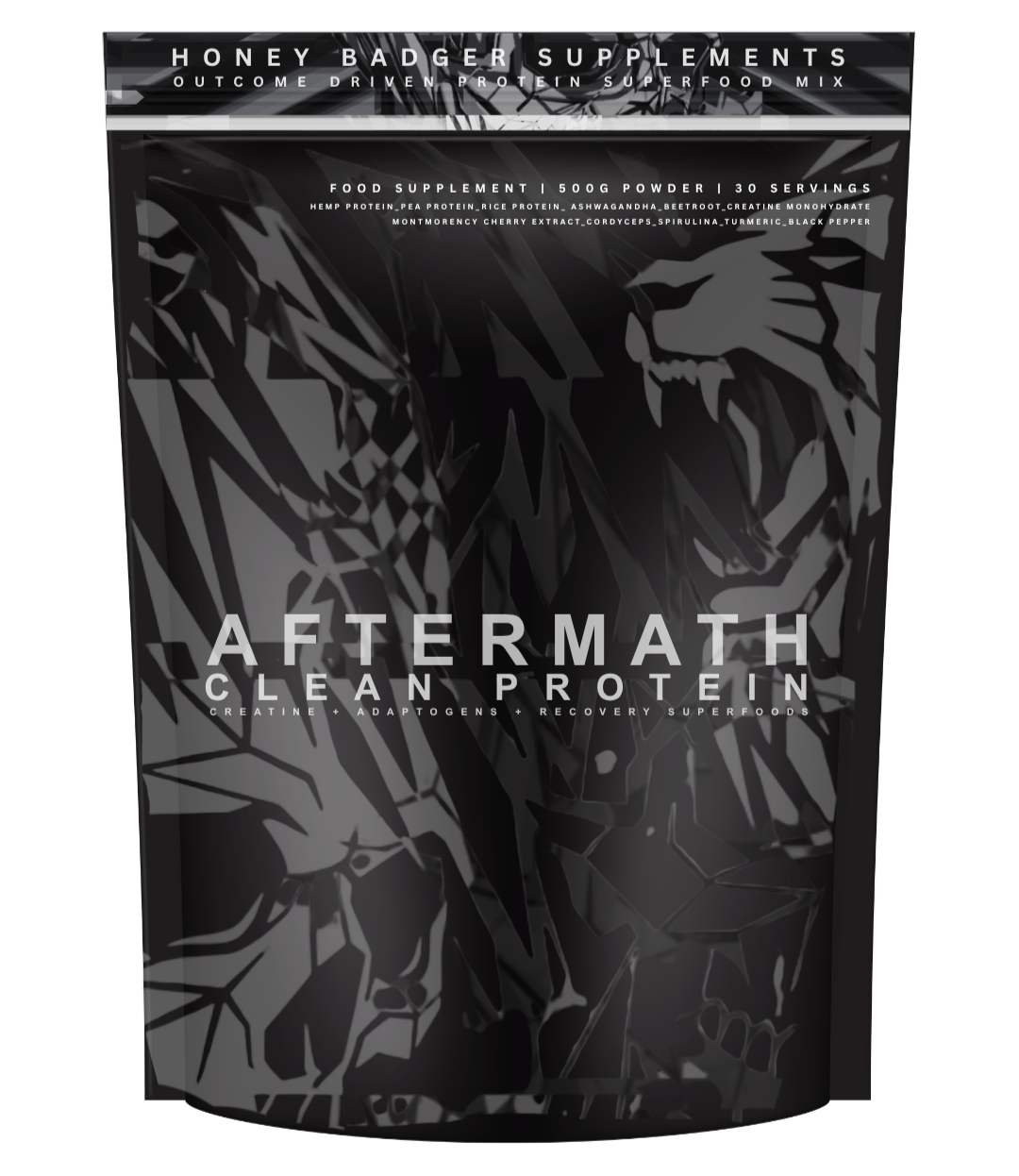
10.8g Total protein per 16.67g serving
65g Protein per 100g — competitive with premium whey
3× Protein sources delivering a complete amino acid profile
Why Creatine Is Built Into AFTERMATH And Why That Matters
Creatine monohydrate is the most comprehensively studied supplement in sports science. The evidence base spans decades, thousands of trials, and multiple independent meta-analyses. The conclusion is consistent: creatine supplementation increases strength output, improves high-intensity exercise performance, supports muscle protein synthesis, and, more recently, has been shown to have meaningful cognitive benefits in conditions of mental fatigue.
At 2,000mg (2g) per serving, AFTERMATH delivers creatine at every single use — taken at the moment the research identifies as most beneficial: post-workout, alongside protein, when muscle cells are most receptive to nutrient uptake.
Research context - creatine
The European Food Safety Authority conducted a thorough scientific review of creatine supplementation and confirmed that 3g of creatine monohydrate daily increases physical performance during high-intensity training. This is one of the few sports nutrition health claims approved under EU and retained UK food regulations, meaning it's not a marketing claim, it's a regulatory endorsement. AFTERMATH delivers 2g per single serving, with label guidance to take two servings on training days for the full 4g daily dose.
The commercial argument for including creatine in the formula is equally compelling. Most men who train consistently already buy creatine separately, spending an additional £15–25 per month. AFTERMATH eliminates that purchase by building it in at the right dose at the right time. It's not a gimmick. It's an intelligent formulation decision that saves money and ensures consistent intake.
L-Leucine The Ingredient That Closes the Gap With Whey
This is arguably the most important single addition in the AFTERMATH formula and the one that most plant protein brands miss entirely.
The research on leucine and muscle protein synthesis is unambiguous. Leucine functions as a direct activator of the mTOR complex, essentially acting as a metabolic on-switch for muscle building. Without sufficient leucine crossing the threshold required to activate mTOR, muscle protein synthesis is significantly blunted regardless of total protein intake.
Whey protein naturally contains approximately 10–11% leucine by weight. Pea protein contains around 8%. The gap seems small but the downstream effect on mTOR activation is meaningful, which is why studies comparing equal amounts of plant and whey protein for muscle hypertrophy have historically favoured whey.
Research context - leucine and mTOR
Research published in the Journal of Nutrition established that leucine functions as a primary metabolic signal for muscle protein synthesis, independent of its role as a building block amino acid. Studies by Norton and Layman demonstrated that the leucine content of a meal determines the magnitude of the post-meal anabolic response, explaining why protein sources with higher leucine concentrations consistently outperform those with lower concentrations even when total protein is matched.
AFTERMATH adds 1,000mg of free-form L-Leucine per serving, on top of the leucine already present in the protein matrix. This elevates the total leucine content above the mTOR activation threshold that research has identified, giving the formula an anabolic response that directly challenges whey without requiring it.
This is the detail that separates a formulated product from a commodity protein. It requires understanding the mechanism, not just the macros.
The Recovery Layer - What Protein Alone Cannot Do
Building muscle is a two-part process. The first part is stimulating protein synthesis, which the protein matrix and leucine address. The second part is managing the inflammatory response that training creates, and delivering nutrients to the recovering tissue efficiently enough for that synthesis to actually occur at scale. Protein alone cannot do this. Recovery is a system, not a macronutrient.
Montmorency Cherry Extract — 500mg per serving
Montmorency cherry extract is the most rigorously evidenced whole-food recovery ingredient available. It is rich in anthocyanins and polyphenols, potent antioxidant compounds that directly neutralise the free radicals generated by intense exercise and reduce the inflammatory signalling that causes post-training muscle soreness.
Research context — Montmorency Cherry
A landmark study by Howatson and colleagues, published in the Scandinavian Journal of Medicine and Science in Sports, examined the effect of Montmorency cherry supplementation on muscle damage markers following a marathon. Participants who supplemented with tart cherry showed significantly lower levels of inflammatory markers and reported substantially reduced muscle soreness compared to the placebo group, alongside faster recovery of muscle function. Subsequent trials in resistance-trained athletes replicated these findings across different exercise modalities.
Montmorency cherry also contains naturally occurring melatonin precursors that have been shown to improve sleep quality, which matters because the majority of muscle protein synthesis occurs during deep sleep. Recovery is not just what happens in the gym. It's what happens at 3am.
Beetroot Powder — 600mg per serving
Beetroot powder is the largest single dose in the superfood blend, and for a specific mechanistic reason. Dietary nitrates, which beetroot is one of the richest natural sources of, are converted by the body into nitric oxide, a signalling molecule that dilates blood vessels and improves blood flow to working and recovering muscle tissue.
The relevance for recovery is direct: better blood flow means better delivery of the amino acids and creatine in this formula to the muscle cells that need them. The performance nutrition research on beetroot and dietary nitrates, particularly the body of work by Professor Andrew Jones at the University of Exeter, has consistently demonstrated improvements in oxygen utilisation, reduced oxygen cost of exercise, and improved time to exhaustion in trained athletes.
AFTERMATH uses beetroot in the recovery context: improving the delivery of everything else in the formula to recovering muscle.
Ashwagandha and Cordyceps The Performance Hormonal Layer
This is the layer that makes AFTERMATH distinctly a Honey Badger product, rather than just a well-formulated plant protein. Ashwagandha and Cordyceps operate at the hormonal and cellular energy level, targeting the physiological factors that determine whether a man can actually recover and perform consistently over time.
Ashwagandha — 300mg per serving
Cortisol is the primary hormonal antagonist of muscle building. It is a catabolic hormone, meaning it breaks down muscle tissue rather than building it. Chronically elevated cortisol, which is common in men under high training loads, work stress, or poor sleep, actively works against the protein synthesis that every other ingredient in this formula is trying to support.
It is standardised to 5% withanolides, the active compounds responsible for its adaptogenic effects and has been used in a range of double-blind, placebo-controlled clinical trials.
Research context — Ashwagandha
A double-blind randomised controlled trial by Choudhary and colleagues examined the effect of 300mg of Ashwagandha daily over 60 days. Participants in the supplementation group showed a reduction in serum cortisol of 27.9% compared to placebo, alongside significant improvements in self-reported stress scores and quality of life markers. A separate trial by Wankhede and colleagues in the Journal of the International Society of Sports Nutrition found that men supplementing with ashwagandha showed significantly greater improvements in muscle strength and recovery versus placebo after eight weeks of resistance training.
At 300mg per serving, within the clinically studied range, the Ashwagandha in AFTERMATH directly supports the hormonal environment needed for the protein matrix to do its job effectively.
Cordyceps Extract — 250mg per serving
Cordyceps militaris has been used by elite endurance athletes for decades, and the mechanism behind its performance benefits is well-characterised: it supports ATP production at the mitochondrial level and improves the efficiency with which cells utilise oxygen.
In the context of a recovery formula, this matters because ATP - adenosine triphosphate, is the primary energy currency of cellular function. Training depletes ATP stores rapidly. The rate at which those stores are restored directly affects recovery speed and the capacity to train effectively again in subsequent sessions.
Research in the Journal of Dietary Supplements has demonstrated that Cordyceps supplementation improved VO2 max and delayed fatigue onset in physically active adults. Its inclusion in AFTERMATH is not a superfood trend, it is a mechanistically justified addition to the cellular energy restoration process.
Spirulina The Most Nutrient-Dense Ingredient Per Milligram
Spirulina is often dismissed as a wellness trend. The nutritional science tells a different story. At 350mg per serving, spirulina in AFTERMATH contributes approximately 0.21g of additional complete protein, alongside phycocyanin, one of the most potent antioxidant compounds found in nature, plus B vitamins, iron, and zinc.
Phycocyanin has been shown to inhibit the same inflammatory pathway targeted by ibuprofen (COX-2 inhibition), without the gastrointestinal side effects. For a recovery formula, the antioxidant protection spirulina provides against training-induced oxidative stress is directly relevant and mechanistically supported.
Research context - Spirulina
A double-blind, crossover trial by Kalafati and colleagues examined the effect of spirulina supplementation on exercise performance and antioxidant status in trained men. The supplementation group showed significantly improved time to exhaustion, reduced markers of lipid peroxidation, and increased antioxidant enzyme activity compared to placebo, suggesting that spirulina provides meaningful protection against the oxidative damage caused by intense training.
Spirulina also adds genuine whole-food nutritional depth that distinguishes AFTERMATH from a formula built entirely on isolates. Real performance nutrition is not just about macros, it is about the micronutrient environment in which those macros operate.
What the Research Actually Says - Summary
The ingredients in AFTERMATH are not chosen for marketing appeal. Each has a specific mechanistic role and a clinical evidence base. Here is how they interact as a system:
Protein Matrix
Pea 7,500mg · Rice 3,000mg · Hemp 1,000mg
Creates a complete essential amino acid profile equivalent to whey. Delivers 10.8g total protein per serving at 65g protein per 100g.
Creatine Monohydrate
2,000mg per serving
EFSA-approved for increasing physical performance in high-intensity exercise. Supports phosphocreatine replenishment and muscle protein synthesis.
L-Leucine
1,000mg per serving
Primary mTOR activator. Closes the leucine gap between plant and whey protein, enabling equivalent anabolic signalling.
Montmorency Cherry
500mg per serving
RCT-backed reduction in DOMS, inflammation markers, and improved sleep quality via natural melatonin precursors.
Beetroot Powder
600mg per serving
Dietary nitrate source. Converts to nitric oxide for improved blood flow and nutrient delivery to recovering muscle tissue.
Ashwagandha
300mg per serving
Reduces cortisol by up to 27.9% in clinical trials. Supports testosterone and reduces exercise-induced muscle damage.
Cordyceps Extract
250mg per serving
Supports ATP production and oxygen utilisation at the cellular level. Accelerates post-exercise energy restoration.
Spirulina
350mg per serving
Phycocyanin antioxidant protection against oxidative stress. Adds complete protein, B vitamins, iron, and zinc.
Together these ingredients address the four physiological requirements for effective muscle building and recovery: protein synthesis stimulation, anabolic signalling, inflammation management, and cellular energy restoration. Standard plant protein addresses only the first. AFTERMATH addresses all four.

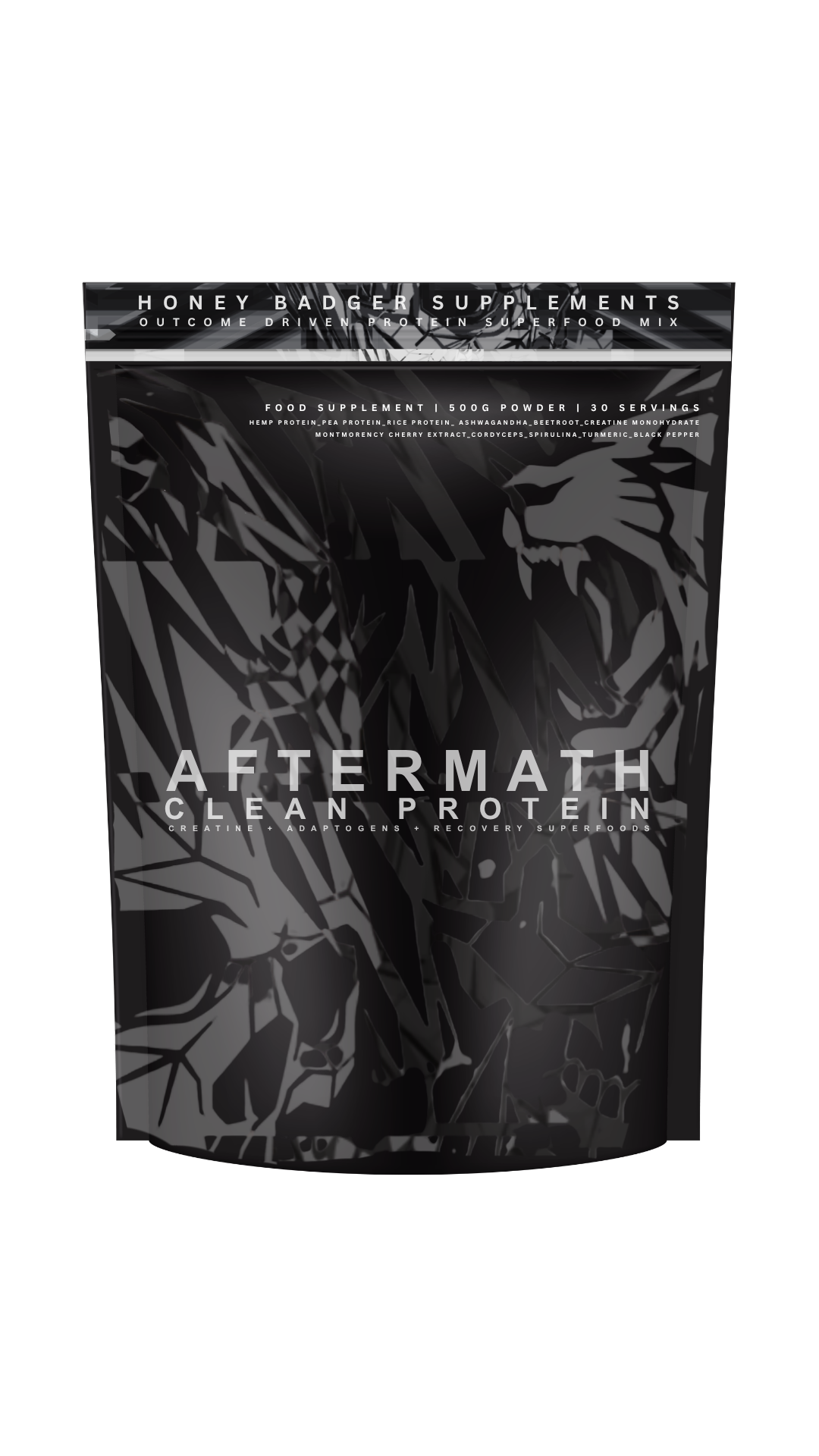
AFTERMATH - 500g
30 Servings
10 Active Ingredients
Plant protein built for the way men actually perform. No fillers, no white-label, no compromises.
Frequently Asked Questions
Can plant protein really build as much muscle as whey?
When the leucine gap is corrected and the amino acid profile is complete, yes, the evidence increasingly supports this. The 2015 Babault study showed comparable bicep hypertrophy between pea protein and whey in resistance-trained men over 12 weeks. The caveat is that most plant proteins do not correct for leucine, which is why head-to-head comparisons have historically favoured whey. AFTERMATH adds free-form L-Leucine specifically to address this. With the leucine gap closed and a complete amino acid profile from the triple-source matrix, the anabolic response is directly competitive with whey.
Why is creatine included in a protein powder?
Because the research is unambiguous that creatine taken post-workout alongside protein is the optimal timing for both. Muscle cells are most receptive to nutrient uptake in the post-exercise window. By building creatine into AFTERMATH at 2g per serving, with guidance to take 2 servings on training days for the evidence-based 3–4g daily dose, the formula ensures consistent intake at the right time without requiring a separate purchase. It is also a genuine market differentiator: no other plant protein on the UK market currently does this.
Is 10.8g of protein per serving enough?
AFTERMATH is positioned as a functional recovery formula, not a standalone protein replacement. At 10.8g per 16.67g serving — 65g per 100g — it delivers a meaningful protein contribution as part of a diet that includes protein from food sources. For men eating adequate dietary protein, AFTERMATH's per-serving amount is appropriate for a post-workout supplement that also includes creatine, leucine, and five performance superfoods. Those requiring higher per-serving protein may take two scoops (21.6g protein, 4g creatine) on training days.
Is AFTERMATH suitable for vegans?
Yes. All 10 active ingredients are plant-derived. The formula contains no animal products, no whey, no casein, and no collagen. The only consideration is the manufacturing environment — AFTERMATH is produced in a facility that also handles milk, eggs, soy, and nuts. Individuals with severe allergies should note this before purchasing.
How does Ashwagandha support muscle building?
Ashwagandha supports muscle building indirectly through cortisol reduction and directly through its effect on muscle damage markers. Cortisol is a catabolic hormone, it breaks muscle tissue down. Ashwagandha, at doses consistent with the 300mg used in AFTERMATH, has been shown in clinical trials to reduce serum cortisol by approximately 27.9%, improving the hormonal environment for muscle protein synthesis. Separately, trials in resistance-trained men showed greater strength gains and faster recovery in the ashwagandha group compared to placebo over 8 weeks.
When should I take AFTERMATH?
Within 30 minutes of completing training. This post-exercise window is when muscle cells are most receptive to protein, creatine, and leucine uptake. Mix one scoop (16.67g) with 300–350ml of cold water or oat milk. On training days where you want to optimise creatine intake, take two scoops, delivering 21.6g protein and 4g creatine, both within established safe daily limits.
What does AFTERMATH taste like?
AFTERMATH is available in Raw Cacao and Honey, Madagascar Vanilla, and Unflavoured. It is sweetened with coconut sugar and monk fruit extract, no sucralose, no aspartame, no artificial sweeteners. The formula mixes cleanly with water or plant milk. The unflavoured variant is designed for those who stack it with other products or prefer to control their own flavour additions.
The Bottom Line
Plant protein's reputation for inferior muscle-building results is not inevitable. It is a formulation problem. Specifically, it is the result of single-source protein bases that leave the amino acid profile incomplete, combined with a failure to address the leucine deficiency that prevents full mTOR activation, and no attempt to manage the inflammatory environment that determines whether the protein you consume actually reaches recovering muscle.
AFTERMATH addresses all of this. A triple-source protein matrix that creates a complete amino acid profile. Free-form L-Leucine that closes the anabolic gap with whey. Creatine monohydrate built in at the right dose at the right time. Montmorency cherry and beetroot for the inflammatory and blood flow environment. Ashwagandha and Cordyceps for the hormonal and cellular energy layer. Spirulina for antioxidant protection and micronutrient depth.
Ten ingredients. One formula. Built around what the science actually says about muscle growth and recovery, not what the supplement industry finds convenient to market.
Not sure where to start?
TAKE the Performance Assessment.
CHANCE TO WIN 3 MONTHS SUPPLY OF LIFE OR DEATH